
 Patient Login

PRESSURE INJURY PREVENTION
INFORMATION LEAFLET FOR PATIENTS, FAMILIES, AND CAREGIVERS
What is Pressure Injury?
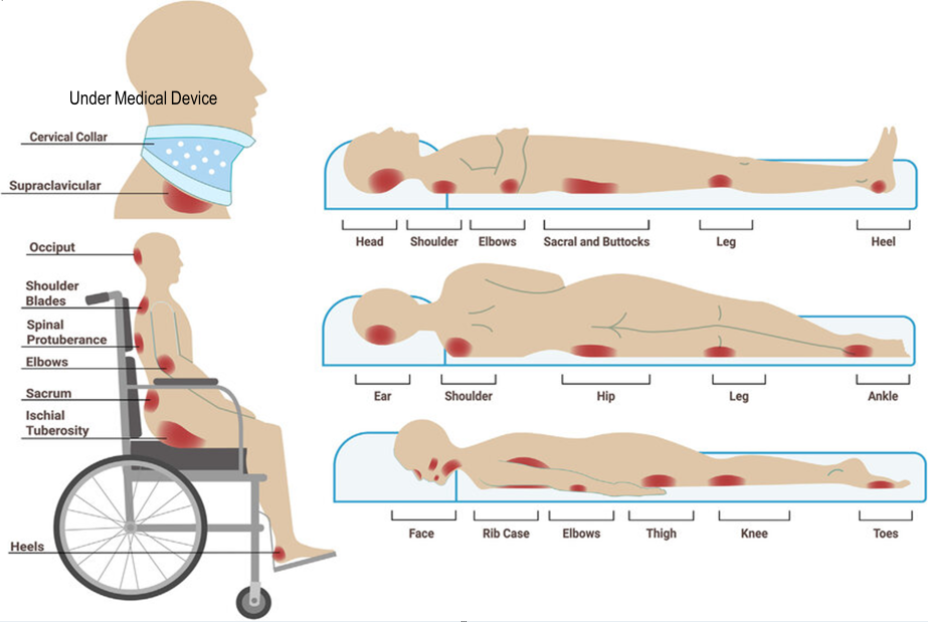
A pressure injury, also known as pressure ulcer, bedsore, or decubitus (lying down) ulcer, is an injury or wound on the skin and underlying tissue. It typically develops over the bony areas of the body when you sit or lie in the same position for too long or under medical devices. Apart from being very painful, a pressure ulcer could affect recovery from your illness, cause pain, discomfort and distress, and could result in a long stay in hospital.
What Causes Pressure Injuries?
- Pressure – from body weight pressing down on the skin or medical devices.
- Shear – when the skin slides against surfaces, stretching and damaging tissue.
What Are the Signs?
Early signs include redness, warmth, or tenderness that doesn’t go away. If not treated, the skin may blister or open, exposing deeper tissue, fat, muscle, or even bone.
Where Can They Develop?
Pressure injuries commonly occur on the bony prominences such as back of the head, shoulders, elbows, lower back, hips, buttocks, heels, and ankles. Medical devices such as oxygen tubing, catheters, or masks can also cause pressure injuries—check under them daily!
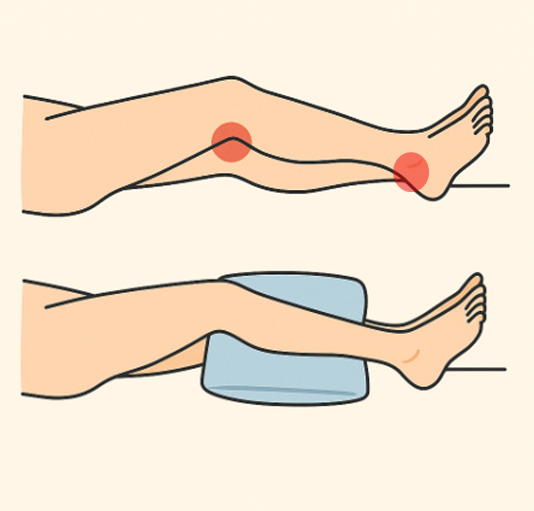
Important: Pressure injuries can also occur between bony prominences, such as:
– Between the knees when legs rest together
– Between the ankles when feet are in contact for a long time
Use pillows or soft padding between the knees and ankles to avoid skin-to-skin pressure and friction.
Who Is at Risk?
Anyone can develop a pressure injury, but people are more at risk if they:
- Have limited movement or cannot change position without help
- Cannot feel pain or impaired sensation
- Are incontinent or unable to control passing urine or stool
- Are seriously ill or undergoing surgery
- Have had pressure injuries in the past
- Have poor nutrition and hydration
- Are very old or very young
- Have a damaged spinal cord and can neither move nor feel their buttocks or legs
- Have heart or circulation problems
How to Prevent Pressure Injuries – Think SSKIN!
- Skin: Check your skin every shift or after changing position. Report redness or damage. Vulnerable skin or bony prominent areas can be covered with a prophylactic foam dressing.
- Surface: Use pressure-relieving mattresses or cushions as advised.
- Keep Moving: Change position at least every 2 hours. If you already have a pressure injury, lying or sitting on the affected skin should be avoided as much as possible, as it will make the injury worse. Use pillows to lift heels and prevent skin rubbing.
- Incontinence: Damp skin may be damaged more easily by pressure, for example urine, feces, sweat or a weeping wound. Keep skin clean and dry. Use barrier creams if needed.
- Nutrition: Eat balanced meals and drink plenty of water to keep your skin healthy.
Treatment
If you already have a pressure injury, your healthcare provider will recommend suitable dressings or other treatments such as negative pressure therapy or debridement. Report any pain, swelling, or signs of infection.
You Can Help Prevent Pressure Injuries!
Pressure injuries are mostly preventable. By checking your skin daily, keeping mobile, and asking for help when needed, you can protect yourself and your loved ones. Prevention starts with you!
For questions or concerns, please speak with your nurse or healthcare provider.